英語(文章題) 令和5年(2023年)
  1. 残り時間が0になると、自動的に採点します。
  2. 時間内に終了する場合は、一番下の「採点する」のボタンを押してください。
残り時間: 分 秒
  2点 × 1問 + 3点 × 16問 = 50点
 No 令和5年(2023年)英語
問題原本はこちら → 大阪府 公立高校入試問題 英語
1 次は、高校生の広志 (Hiroshi)、アメリカから来たグリーン先生 (Mr. Green)、
インドネシアからの留学生のサリ (Sari) の3人が学校で交わした会話の一部です。
会話文を読んで、あとの問いに答えなさい。

Hiroshi: Hi, Mr. Green. I have a question for you.
Mr. Green: Hi, Hiroshi. What is your question?
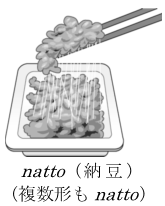
Hiroshi: Yesterday, I [ ① ] for information on the Internet about fermented soybean food,
for example, natto.
Then, I found some interesting information.
According to Ⓐit, natto is one kind of fermented soybean food
and there are many other kinds of fermented soybean food in the world.
Are there any kinds of fermented soybean food in America?
       
Mr. Green: Well, natto is often sold in supermarkets in America,
but I’m not sure that other kinds of fermented soybean food are sold there.
However, I know that there are other kinds of fermented soybean food in Asia.
Hiroshi: Really? Why do you know that?
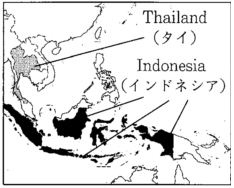
Mr. Green: Actually, when I visited Thailand three years ago,
I ate fermented soybean food made in Thailand.
I studied cultures of Asia at university,
and learned that some areas and countries in Asia have similar food.
They have a similar climate, and similar trees and plants,
so people there can make similar food.
       
Hiroshi: That sounds interesting.
You mean [   ②   ] , right?
Mr. Green: That’s right!
Hiroshi: Thank you, Mr. Green.
I will try to find information about fermented soybean food in Asia.
Mr. Green: I hope you’ll find something about it. Oh, Sari is there.
She is from Indonesia. Maybe she knows something.
[  ③  ] 
Hiroshi: Oh, yes! I’ll do so. Hi, Sari.
Sari: Hi, Hiroshi. Hi, Mr. Green.
Hiroshi: Sari, you’re from Indonesia, right?
I was talking with Mr. Green about fermented soybean food in the world.
In Indonesia, are there any kinds of fermented soybean food?
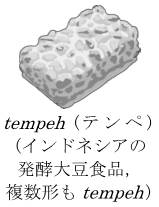
Sari: Yes. We have food called “tempeh.”
Hiroshi: Tempeh? Does it look like natto?
Sari: Well, tempeh and natto look very different.
[  ④  ] of tempeh now, I could show it to you.
Hiroshi: Oh, I’ve just found a picture on my tablet.
Look at this. The food in this picture looks like cake.
      
Mr. Green: Is this tempeh?
Sari: Yes, this is tempeh.
Tempeh and natto look different, right?
Tempeh isn’t sticky.
When I ate natto for the first time, I was surprised that natto was sticky!
Hiroshi: I’m surprised to know that tempeh isn’t sticky.
Mr. Green: I can understand how you felt, Sari.
I told Hiroshi that I ate fermented soybean food made in Thailand.
[ア] So, when I first ate natto,
I was surprised like Sari because eating sticky food was a new experience for me.
Hiroshi: I see. It’s interesting to know how other people feel when they eat natto.
Mr. Green: That’s true. [イ]
Hiroshi: Is tempeh popular food in Indonesia?
Sari: Yes! I think some people in Indonesia always have tempeh to cook at home
and they eat it almost every day.
Mr. Green: How do they cook tempeh?
Sari: We usually fry tempeh.
For example, my family fries tempeh with various vegetables.
Mr. Green: That’s interesting.
In Japan, natto is usually eaten with rice, right?
[ウ] People eat various kinds of fermented soybean food in various ways.
[エ]
Hiroshi: I can’t imagine the taste of tempeh.
But, I want to try it someday.
Sari: Now, tempeh is getting popular in Japan.
[  ⑤  ] 
Hiroshi: Really? I didn’t think I could buy tempeh in this neighborhood.
I want to eat tempeh, and compare tempeh and natto.
Sari: Let’s go there this weekend.
Hiroshi: Yes! Thank you, Sari.
Learning about various kinds of food in other countries was interesting.
And, it made me become more interested in natto.
I think learning about food in other countries leads me to learning about food
in my country.
Sari: I agree with you.
[  ⑥  ] 
Mr. Green: Thank you for telling us about tempeh,
Sari, and thank you for sharing an interesting topic, Hiroshi.
 〔注〕 fermented soybean food 発酵大豆食品         climate 気候
tablet タブレット    sticky ねばねばした    fry (フライパンなどで) 炒(いた)める
問1 本文の内容から考えて、次のうち、
本文中の [ ① ] に入れるのに最も適しているものはどれですか。

ア got
イ looked
ウ took
エ used

答え:
ア  イ  ウ  エ 

問2 本文中の Ⓐit の表している内容に当たるものとして最も適している語を、
次のア~エから選びなさい。

ア information on the Internet
イ fermented soybean food
ウ some interesting information
エ natto

答え:
ア  イ  ウ  エ 

問3 本文の内容から考えて、次のうち、
本文中の [  ②  ] に入れるのに最も適しているものはどれですか。
次のア~エから選びなさい。

ア only people living in Japan and Thailand can make fermented soybean food
イ people living in various areas tell each other how to make popular food through the Internet 
ウ people living anywhere in the world can make similar food because the climate isn’t important for making food 
エ even people living in different areas and countries in Asia can make similar food because the climates, trees and plants of those places are similar 

答え:
ア  イ  ウ  エ 

問4 本文の内容から考えて、次のうち、
本文中の [  ③  ] に入れるのに最も適しているものはどれですか。
次のア~エから選びなさい。

ア How is she today?
イ How about asking her?
ウ What are you going to do?
エ Let’s ask her about American food.

答え:
ア  イ  ウ  エ 

問5 本文中の [   ④   ] of tempeh now, I could show it to you.’ が、
「もし今私が1枚のテンペの写真を持っていたら、
それをあなたに見せてあげることができるでしょうに。」という内容になるように、
次のア~エから選びなさい。

ア If I had a picture
イ If I have a picture
ウ When I had a picture
エ When I have a picture

答え:
ア  イ  ウ  エ 

問6 本文中には次の英文が入ります。

And, it wasn’t sticky, either.

本文中の [ア] ~ [エ] から、入る場所として最も適しているものを、
選びなさい。

答え:
ア  イ  ウ  エ 

問7 本文の内容から考えて、次のうち、本文中の [   ⑤   ] に入れるのに
最も適しているものはどれですか。
次のア~エから選びなさい。

ア I found that tempeh was interesting food.
イ I found a book about tempeh in the school library.
ウ I found tempeh in the supermarket near our school.
エ I found that tempeh and natto were different when I was in Indonesia.

答え:
ア  イ  ウ  エ 

問8 本文中の [  ⑥  ] が、
「私はあなたにテンペについて話ができてうれしいです。」という内容になるように、
次の〔   〕内の語を並べかえたものを
次のア~エから選びなさい。

I 〔 am could glad I that 〕 tell you about tempeh.

ア could glad that I am
イ could I am glad that
ウ am I could glad that
エ am glad that I could

答え:
ア  イ  ウ  エ 

問9 次のうち、本文で述べられている内容と合うものはどれですか。
次のア~エから選びなさい。

ア Hiroshi asked Mr. Green where people in America went to buy fermented soybean food.
イ Mr. Green knows that there are some kinds of fermented soybean food in Asia.
ウ Sari knows that tempeh and natto look different, but she has never eaten natto before.
エ Sari thinks tempeh is popular only among people in Indonesia.

答え:
ア  イ  ウ  エ 

2 高校生の美香 (Mika) が英語の授業でスピーチを行いました。
次の問1~問8に答えなさい。

次は,美香が行ったスピーチの原稿です。
彼女が書いたこの原稿を読んで、あとの問いに答えなさい。      
 Please imagine that you have a favorite cup.
You use it every day.
But, one day, you [ ① ] the cup and it breaks.
You’ll be sad, right?
Then, what will you do with the broken cup?
Maybe you will throw it away, or you may connect the pieces of the broken cup with glue.
But, there is a traditional way of repairing.
The way is called “kintsugi.”
Today, I’ll tell you about kintsugi.

 When my favorite cup broke last year, my brother told me about kintsugi.
I heard the word “kintsugi” for the first time then.


[  ②  ]
He used traditional glue called urushi to connect the pieces and after that,
he put some powdered gold on the joins.
I was surprised to see this because he didn’t hide the joins.
I asked him why he put some powdered gold on the joins.
He said, “To decorate the joins.”
It took a long time to finish repairing the cup,
but, when I looked at the joins decorated with powdered gold, they looked beautiful.
I thought kintsugi was interesting and I wanted to know more things about kintsugi,
so I read some books about it.

 When people repair things with kintsugi, urushi and powdered gold are usually used.
Urushi is taken from urushi trees.
People in Japan [ ③ ] urushi for more than 3,000 years to connect things together.
In the 16th century, the tea ceremony became popular among some people,
and special cups for the tea ceremony were used.
[       ④       ]
After repairing their broken cup, people thought
that they could make it beautiful by adding powdered gold to the joins.
At that time, decorating things with powdered gold was already known in the art world,
so people started to decorate the joins with powdered gold.
In this way, kintsugi was known to many people.

 When things break, I usually repair them to use them for a long time.
But, actually, I wanted to hide broken parts,
so the idea of decorating the joins with powdered gold was strange to me at first.
However, through learning about kintsugi,
I could imagine that the joins made the repaired thing special.
I talked with my brother about my thought.
Then, he told me about his experience.
Before learning about kintsugi, he [  ⑤  ] which part was repaired.
The repaired part showed that the thing was once a broken thing.
But, kintsugi changed his way of thinking, and now he feels the repaired part is beautiful.
After listening to his experience, I looked carefully at my repaired cup again.
The cup had many joins.
The joins made me feel that the cup was more special than the one I used before repairing.
I also felt that the cup was a special thing to me
because it was [ ⑥ ] for anyone else to get one with the same joins.
I was happy to use the cup again.

 When I first heard the word “kintsugi,” I thought it was just a way of repairing.
But now kintsugi is more than Ⓐthat to me.
When something like a favorite cup breaks, maybe some people don’t know
what to do or other people may throw it away because they can’t use it.
However, if people repair it with kintsugi, [  ⑦  ] .
I think that’s wonderful.
 〔注〕
throw ~ away ~を捨てる glue 接着剤 kintsugi 金継ぎ
urushi 漆 powdered gold 金粉 join 継ぎめ
hide 隠す decorate 装飾する tea ceremony 茶道
問1 本文の内容から考えて、次のうち、
本文中の [ ① ] に入れるのに最も適しているものを、
次のア~エから選びなさい。

ア disappear
イ drink
ウ drop
エ fall

答え:
ア  イ  ウ  エ 

問2 本文中の [  ②  ] が、
「彼は私が私の壊れたカップを金継ぎの方法で直すのを手伝ってくれました。」
という内容になるように、 次の〔   〕内の語を並べかえたものを、
次のア~エから選びなさい。

He 〔 broken  helped  me  my  repair 〕 cup with the way of kintsugi.

ア helped my broken me repair
イ helped me repair my broken
ウ my broken me helped repair
エ my broken helped me repair

答え:
ア  イ  ウ  エ 

問3 本文中の [ ③ ] に入れるのに最も適しているものを、
次のア~エから選びなさい。

ア are using
イ are used
ウ were used
エ have used

答え:
ア  イ  ウ  エ 

問4 本文中の [       ④       ] に、
次の (ⅰ) ~ (ⅲ) の英文を適切な順序に並べかえ、
前後と意味がつながる内容となるようにして入れたい。
あとのア~エのうち、英文の順序として最も適しているものはどれですか。

(ⅰ) However, a cup sometimes broke, and people thought that they could continue to use the broken cup by repairing it.
(ⅱ) At that time, these cups were expensive and getting new ones was not easy, so people used them very carefully. 
(ⅲ) Then, they connected the pieces of the cup together with urushi to keep using the cup. 

ア (ⅱ) → (ⅰ) → (ⅲ)
イ (ⅱ) → (ⅲ) → (ⅰ)
ウ (ⅲ) → (ⅰ) → (ⅱ)
エ (ⅲ) → (ⅱ) → (ⅰ)

答え:
ア  イ  ウ  エ 

問5 本文中の ‘Before learning about kintsugi, he [  ⑤  ] which part was repaired.’ が、
「金継ぎについて学ぶ前、彼はどの部分が直されたのかを誰にも見つけてほしくありませんでした。」
という内容になるように、 次のア~エから選びなさい。

ア doesn’t want anyone to find
イ will not want anyone to find
ウ didn’t want anyone to find
エ couldl not want anyone to find

答え:
ア  イ  ウ  エ 

問6 本文の内容から考えて、次のうち、
本文中の [ ⑥ ] に入れるのに最も適しているものはどれですか。

ア easy
イ impossible
ウ simple
エ useful

答え:
ア  イ  ウ  エ 

問7 本文中の Ⓐthat の表している内容に当たるものとして
最も適している語を、次のア~エから選びなさい。

ア a way of repairing
イ the same joins
ウ kintsugi
エ a special thing

答え:
ア  イ  ウ  エ 

問8 本文の内容から考えて、次のうち、
本文中の [  ⑦  ] に入れるのに最も適しているものはどれですか。
次のア~エから選びなさい。

ア they can’t use it again because connecting the pieces is difficult
イ no one can use it again because it has many joins
ウ it can be used again and it becomes the only one in the world
エ they think it becomes easy for them to throw it away

答え:
ア  イ  ウ  エ